Introduction
Choosing an office for your business is no longer just about picking a location; it’s a high-stakes financial decision. For most entrepreneurs, the debate boils down to a single question: Is coworking really cheaper than a traditional office?
Rent is the number everyone looks at. But rent is only the beginning. The real question is Total Cost of Occupancy (TCO) everything that walks out the door every month, from electricity bills to brokerage fees to the desk your team isn’t using on a Thursday.
At Bootstart, we help businesses make smarter workspace decisions by offering flexible office solutions that reduce overall operational costs. If you’re searching for the Best coworking space in Kothrud, understanding the true cost of occupancy is the first step toward choosing a workspace that supports both your budget and business growth.
Looking Beyond Rent:
Understanding Total Cost of Occupancy (TCO)
A traditional office is a privately leased commercial space rented exclusively by one company.
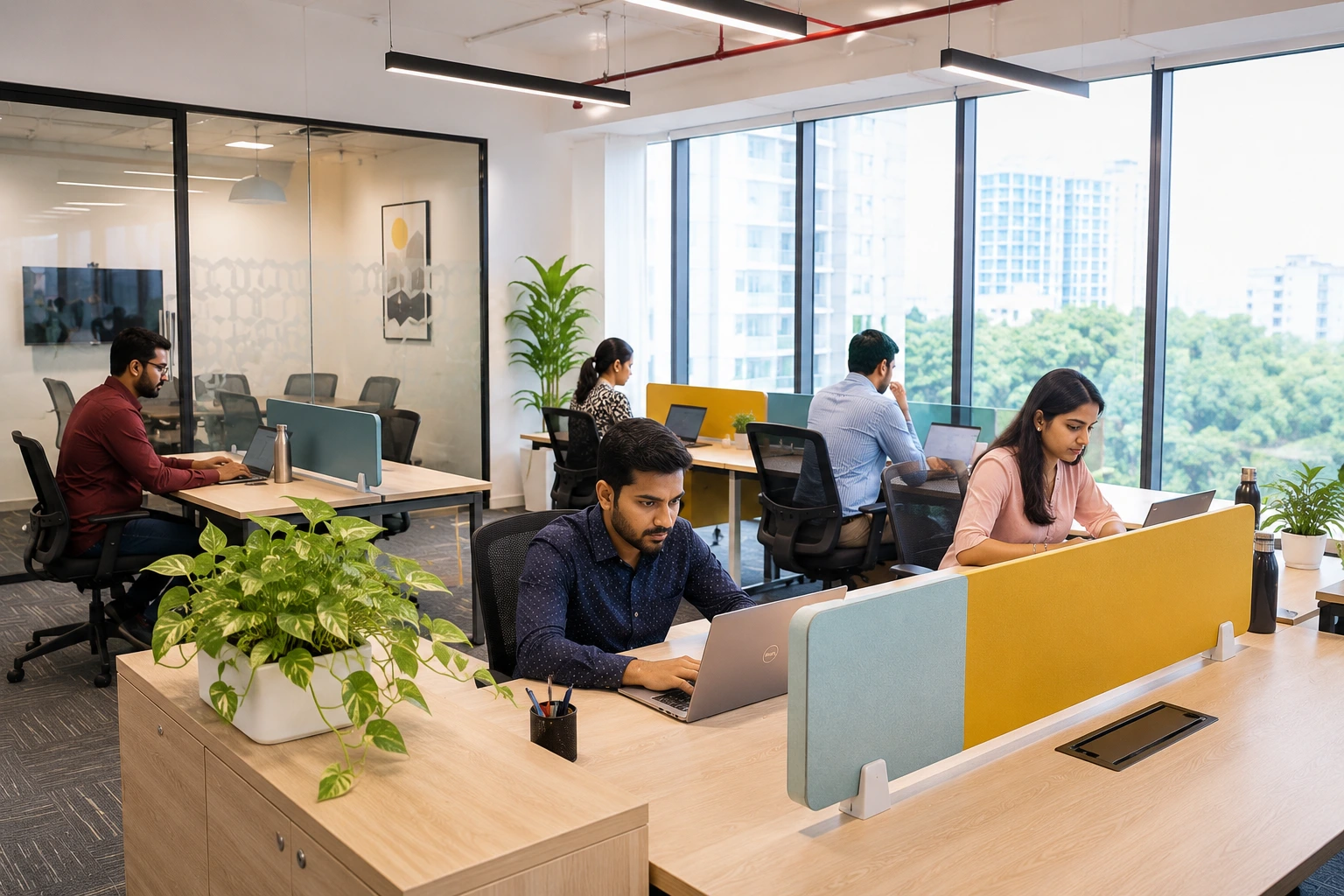
A shared workspace (also known as a coworking space or managed office) is a fully serviced office where businesses pay a monthly membership or rental fee.
When businesses compare office costs, they often make the mistake of comparing monthly rent directly to a coworking membership fee. This is fundamentally broken because it ignores the massive “hidden” expenses of traditional leases. To get an honest comparison, you must look at TCO which includes:
| Feature | Shared Workspace | Traditional Office |
|---|---|---|
| Upfront Investment | Minimal | High |
| Lease Duration | Flexible | Long term |
| Operational Drag | Included | Separate Expense |
| Scalability | Easy | Difficult |
| Move in time | Immediate | Weeks or Months |
| Monthly Expense | Predictable | Variable |
In the first year, traditional office setup can be 2.8x to 3.5x more expensive than a shared office due to these upfront cost.
So, Which One Should You Choose?
Choose a shared workspace if:
● You’re a startup, freelancer, or small-to-mid team.
● Your team size fluctuates or you’re on a hybrid model.
● You want zero operational headaches and fast setup.
● You’re optimizing for capital efficiency in early or growth stages.
Choose a traditional office if:
● You have a stable, predictable headcount.
● Your industry mandates strict data security and compliance.
● You’re making a 5+ year commitment with no foreseeable change in team size.
● Brand customization and exclusive identity are non-negotiable for your clients.
The "Ghost Space" Problem
Here’s a scenario that plays out constantly: you lease an office for 30 people, sign a 3-year lease, and six months later half the team goes hybrid. You’re now paying for 15 desks nobody is using. Every. Single. Month.
According to LinkedIn India Work Trends 2025, over 60% of knowledge workers in metro cities now operate on a hybrid work model. That means on any given day, a company with 30 desks might have 15 people showing up.
Traditional leases don’t care. Shared workspaces do. You pay for active seats, not square footage.
This ghost space tax is one of the biggest silent killers of office budgets in India today.
Frequently Asked Question (FAQs)
Yes, shared workspaces are generally more affordable for startups and small businesses because they eliminate upfront setup costs and bundle utilities, maintenance, and amenities into one monthly fee.
Beyond rent, traditional offices involve expenses such as security deposits, furniture, internet, utilities, maintenance, cleaning, office management, and periodic repairs.
A shared workspace is ready in days whereas traditional office fit-out in India takes 6–9 months on average before a team can move in.
Businesses are increasingly choosing shared workspaces for their lower operational costs, flexible leasing options, faster setup, premium amenities, and opportunities to network with like-minded professionals.
Most shared workspaces include high-speed internet, electricity, housekeeping, meeting rooms, reception services, security, and pantry access within a single monthly membership fee.
Conclusion
For businesses prioritizing agility and capital preservation: coworking isn’t just a trend; it’s a smarter financial default. For most startups, freelancers, SMEs, and rapidly growing businesses, shared workspaces provide the best financial value. By eliminating upfront CapEx and bundling operational costs into a single predictable fee, you free up lakhs of rupees that could be spent on hiring, marketing, or product development.